Retailers have spent years trying to solve the same challenge: how do you drive repeat customers, increase lifetime value, and create predictable revenue beyond one-time transactions?
The answer is increasingly clear. Membership and loyalty programs are no longer just a "nice to have." They're becoming a core revenue and retention strategy.
When structured the right way, these programs can generate seven figures in incremental revenue while strengthening customer relationships at the same time.
The Shift From Discounts to Membership
Traditional loyalty programs were built around points, occasional discounts, or one-off incentives. While those still have value, they often lack consistency and don't always materially change customer behavior.
Membership programs flip that model.
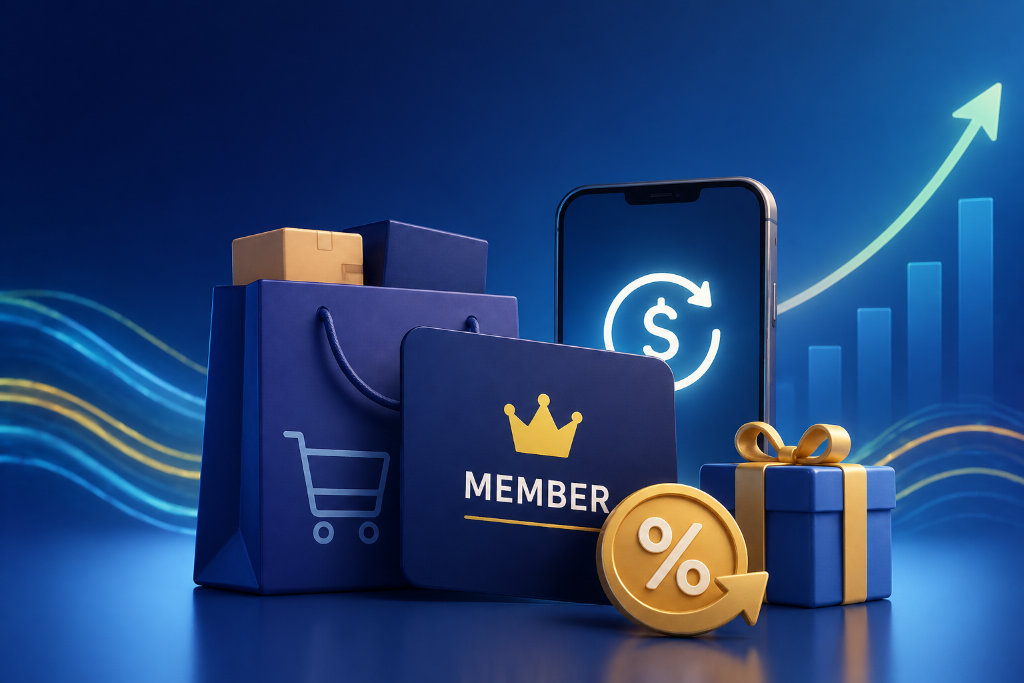
Instead of waiting for customers to come back, retailers create a recurring relationship. Customers opt in, pay a monthly or annual fee, and receive ongoing benefits that make it worth staying engaged.
This changes the dynamic entirely. You move from transactional to habitual.
The Power of Cash Back as a Core Benefit
One of the most effective drivers of adoption is simple: cash back.
Consumers understand it instantly. There's no complicated points system or confusing rewards math. Spend money, get money back.
But here's where it gets interesting.
Retailers can offer competitive cash back incentives without funding those rewards themselves. Behind the scenes, a third-party platform can power the program and cover the cash back payouts. The retailer simply integrates the experience into its ecosystem, whether that's email, app, checkout, or post-purchase touchpoints.
That means:
- No cash back liability
- No major operational complexity
- Immediate value for the customer
- A new recurring revenue stream for the retailer
Turning Membership Into a Revenue Engine
When done right, membership programs can become a meaningful revenue line, not just a marketing expense.
Let's break it down simply.
If a retailer charges $9.99 per month and enrolls 10,000 members, that creates roughly $1.2 million in annual recurring revenue.
And that's before factoring in increased purchase frequency, higher average order value, and improved retention.
Even at smaller scale, the economics can become attractive quickly. The key is creating a value proposition strong enough to convert and retain members.
Driving Repeat Behavior and Customer Stickiness
Membership changes how customers think.
Instead of asking, "Do I need something right now?" they start asking, "Where should I shop to maximize my benefits?"
That subtle shift is powerful.
Cash back and ongoing perks give customers a reason to return again and again. Over time, this can help retailers build:
- Higher purchase frequency
- Stronger brand preference
- Better customer retention
- Reduced reliance on discounts and promotions
In many cases, the membership itself becomes the reason a customer chooses one retailer over another.
A Low-Risk, High-Upside Opportunity
One of the biggest advantages of modern membership programs is how easy they are to test.
Because the rewards can be funded externally and the infrastructure is handled by a partner, retailers can launch without a massive internal build or long development timeline.
That makes it an ideal test-and-learn initiative.
Start with a subset of your audience. Promote it through email, app, checkout, or post-purchase messaging. Measure adoption, engagement, and revenue impact. Then scale from there.
Where This Is Heading
Retail is moving toward owned audience monetization.
Brands are realizing that their customer base is one of their most valuable assets, not just for selling products, but for building recurring, high-margin revenue streams.
Membership and loyalty programs sit at the center of that shift. They combine:
- Predictable subscription revenue
- Customer-friendly incentives like cash back
- Stronger customer relationships
- A more compelling reason to keep shoppers engaged
Most importantly, they can do it without forcing retailers to take on the cost burden traditionally associated with rewards programs.
Final Thought
Retailers don't need to reinvent their entire business to unlock new revenue.
Sometimes, it's about layering in the right model.
A well-structured membership program can generate seven-figure revenue, increase repeat purchases, and strengthen customer loyalty, all while creating a better experience for the customer.
That's a rare combination, and one worth exploring.